For farms & irrigation

Catching salt stress before it costs you yield

By the time salinity shows in the canopy, the yield is already gone. We pick up the risk in the soil long before the crop reacts — which leaves enough time to flush the salt out of the root zone instead of watching the block fail.

Request a demo

A warning in December, confirmed in February

One pivot-irrigated field, two scans seven weeks apart. This is the clearest way to show what the service does, because the second scan tests the first one's prediction.

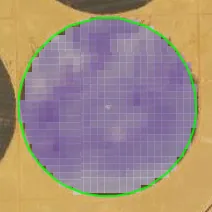
Scan 1 · December

Salinity map of a pivot field, with darker shading marking higher salt concentration in the north-east section
  • Salt concentration in the root zone: lighter = lower, darker = higher

The risk is flagged

Just under half the field comes back at elevated salt risk, concentrated in the north-east. The recommendation: additional leaching irrigation on those zones, to move the salt below the root zone.
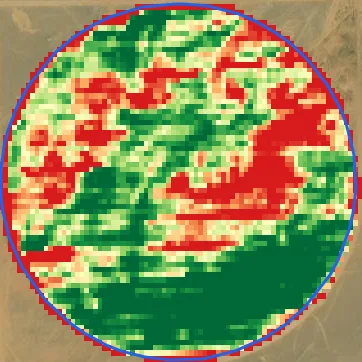
Scan 2 · February

Canopy health map of the same field seven weeks later, showing stressed patchy growth in the section flagged in December
  • Healthy stand
  • Weak growth
  • Stressed

The prediction holds

The same north-east section now shows stressed, patchy growth, matching the December zone almost exactly. The extra leaching was not applied, so the salt stayed where it was.

What you actually do about it

A warning is only useful if it comes with an instruction. The scan does not just say the field is at risk — it splits it into zones and says how much extra water each one needs to move the salt below the root zone.

That is the difference between a diagnosis and a prescription. Flushing the whole pivot to fix one quarter wastes water, pushes nutrients past the roots and costs you the pumping bill on three quarters that did not need it.

  • Every zone gets its own leaching requirement, not a field average
  • Exportable to a variable rate controller, or read off as a simple plan
  • The next scan shows whether the salt actually moved
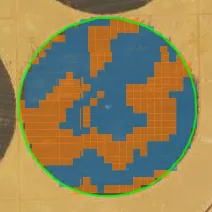
Zone map of the pivot field, with the areas needing additional leaching irrigation shown separately from those on the standard schedule
  • Additional leaching needed — just under half the field
  • Standard irrigation schedule
Leaching zones derived from the December scan. Each zone carries its own water adjustment.

Why this changes the decision

Salinity is not a problem you fix once it is visible. It is a problem you either see coming, or pay for.

Weeks of lead time

The risk is flagged while there is still time to act — before it shows above ground, and before it has cost the season's yield in that zone.

Zone by zone, not field by field

Guidance is mapped to the areas that need it. Flushing a whole pivot to fix one quarter wastes water and pushes nutrients past the roots.

Yield protected, water saved

Targeted leaching avoids both outcomes that cost money: the yield loss from doing nothing, and the water bill from over-correcting everywhere.

See it on your own fields

Send us the boundaries of a pivot you are unsure about. We will scan it and walk you through what comes back.

Request a demo

we are supported by

OMEGA is incubated at ESA BIC Bavaria and supported by EIT Food. Patent filing funded through WIPANO by the German Federal Ministry for Economic Affairs and Climate Action. Co-funded by the European Union.